Materials & design
Opal: material & care guide
Play-of-color and stated construction
Opal is a silica-based gem material known in many varieties for shifting flashes called play-of-color. Natural, laboratory-created and assembled opal are different product descriptions. Doublets and triplets combine layers into one finished piece. Read the construction as well as the name, because a solid stone and an assembly need different care and can look similar from the front.
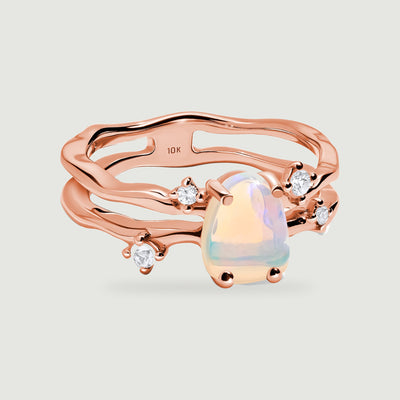
Read solid, assembled, natural and laboratory-created as construction or origin descriptions before concentrating on the brightest color flash. A doublet or triplet introduces layers that should remain part of the item's account. The front view may emphasize play-of-color, so a side view and a clear construction description add useful context. Then compare the background color and the area that flashes as the piece moves. This separates the appearance you enjoy from the way the particular jewelry is made, making the supplied care notes easier to understand.
October jewelry and European associations
Compare the listed material, color and surface finish in the product photographs. Check dimensions, construction and care notes for the individual piece before choosing.
Pendant or earrings for the changing color
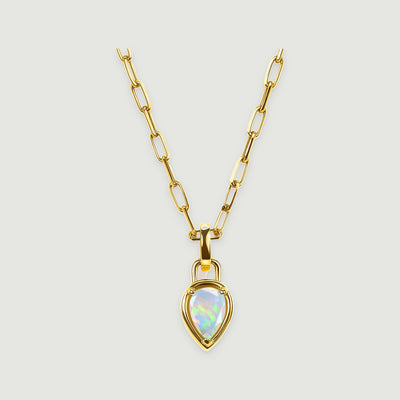
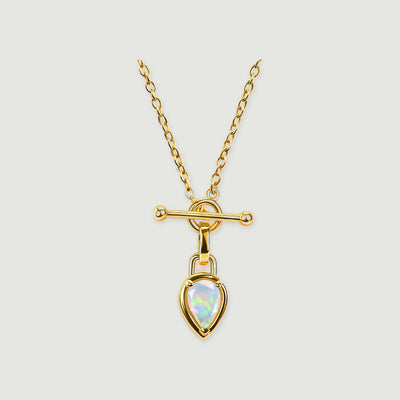
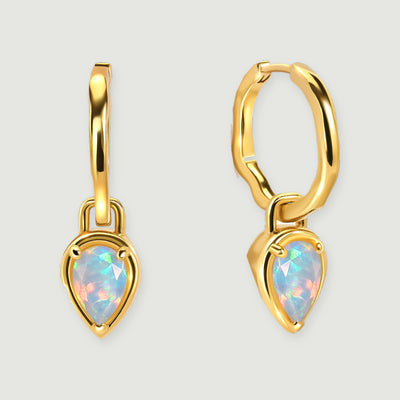
Opal is often chosen for earrings or a pendant where its changing color can be enjoyed with less everyday contact than a ring receives. Keep a regularly worn piece in its own soft compartment when resting. For a gift, explain the actual construction and care alongside the occasion, especially when the design uses a layered assembly.
The stone face, edge and assembly
Compare the play-of-color in more than one angle or light, the background color and the full dimensions. Check whether the listing identifies natural, created, solid or assembled material. A protective setting around the edge suits a domed stone. Pair a small opal with a simple silver chain so the changing color remains the focal point.
A pendant or earrings can let the changing color become the main visual feature without placing the stone in the same daily contact as a ring. Look at the edge around a domed opal and the metal that surrounds it, as well as the bright front face. A simple chain may keep attention on a small opal, whereas a larger setting adds another visible outline. An October gift or a creative new chapter can provide a personal occasion for the piece. Include the actual construction in that gift's story, especially for a layered assembly, so the recipient knows which care information belongs with it.
Heat and adhesive layers
GIA advises protecting opal from heat, abrupt temperature changes and blows. Layered assemblies need attention to their adhesives and should stay clear of prolonged soaking. Keep steam and ultrasonic cleaning away from the opal.
Measuring help: the size hub. Care methods: the care guide.
Compare the related material in sterling silver material notes. For the assembly description or a side view of the edge, contact Lab.
Cultural and material background: GIA: Opal care and cleaning; additional material background.