guide
Bracelet size guide
Measure the wrist where you plan to wear the bracelet. A soft measuring tape works best; a narrow paper strip marked at the overlap also works. Keep it in contact with your skin without pulling it tight, then read the result in centimeters.
- Wrap: place a soft tape around your wrist.
- Mark: note the point where the ends meet.
- Compare: check that measurement against the product’s stated fit range.
| Wrist measurement | Example comfortable inside circumference | How to use this example |
|---|---|---|
| 14 cm | 15–16 cm | Choose the lower end for a closer fit |
| 16 cm | 17–18 cm | Compare with the listing’s wrist range |
| 18 cm | 19–20 cm | Larger beads can need more room |
Bead size changes the feel
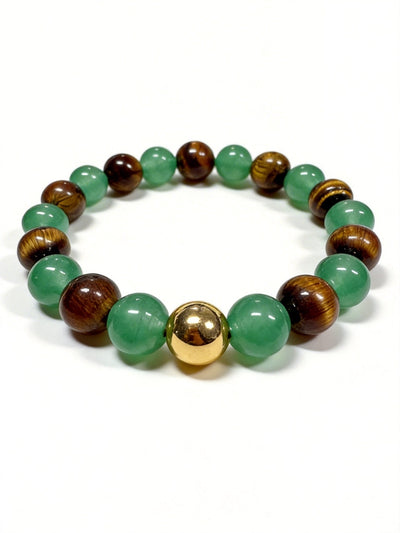
A larger bead takes up more space toward the inside of a strand. Bead diameter alone cannot tell you the bracelet’s usable inside circumference. For a simple single-size circular strand, a rough geometry check is: usable inside circumference ≈ strand length measured through bead centers − π × bead diameter. Keep both measurements in the same unit. This is an estimate, not a sizing guarantee: knots, charms, cord tension and mixed bead sizes change the result.
Choose the right construction
For a stretch bracelet, use the wrist-fit range when supplied. For a sliding knot, check both its smallest and largest opening. For a rigid bangle, measure the hand at its widest point with the thumb folded inward; wrist circumference alone does not establish whether it can pass over your hand.
Wear and care
Roll a stretch bracelet gently over your hand instead of pulling it wide. Take it off for washing, exercise and sleep. If you wear a watch or stack bracelets, allow room for both pieces to move without rubbing or pressing into your wrist.