intention
Peace & Calm: an everyday intention guide
Making space for a quiet moment
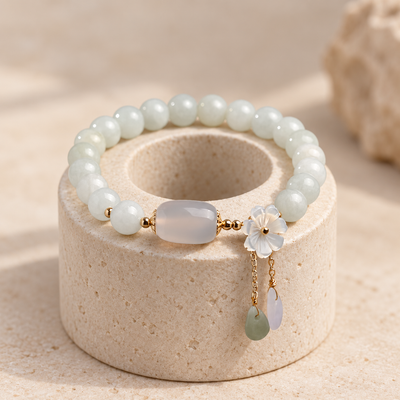
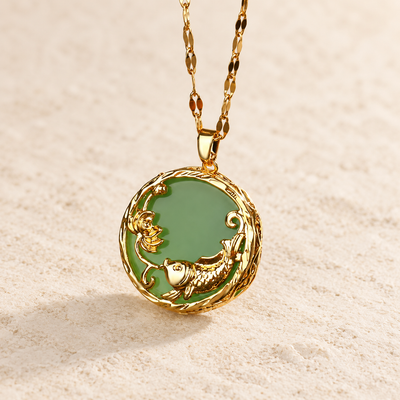
Peace & Calm is a theme for making room for an ordinary quiet moment. A simple bracelet, a smooth pendant or a small object beside a book can give that moment a visual cue. Choose a form that feels comfortable to wear or handle, and think about where a pause already fits into your day.
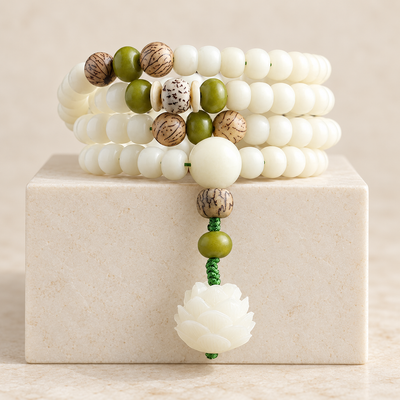
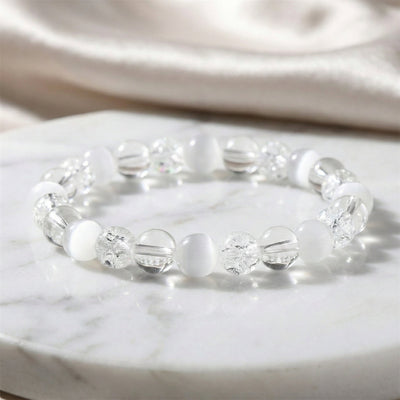
A calm intention becomes more specific when you decide what the quiet moment will involve. Reading one page, sitting beside a journal or turning attention to a single ordinary activity gives the chosen object a place in a routine. A smooth bead strand can offer a small tactile cue, while a Buddha or lotus image introduces a religious visual context. Compare those purposes before choosing by pale color alone. A sacred figure may be welcomed by one recipient, whereas another may prefer an unadorned stone whose appearance fits a familiar corner of their home.
Buddhist imagery and amethyst lore
Lotus and Buddha imagery belong to Buddhist traditions of awakening and contemplative practice. Amethyst's purple color has a long place in jewelry, with clear-headedness appearing in historical lore recorded by GIA. Contemporary crystal traditions connect pale stones and amethyst with calm; a modern wearer can use that association to give a personal routine a clear visual form.
A reading or reflection cue
Some people put on a simple bracelet when beginning a quiet reading period, or keep a polished object beside a journal. A small ritual can be practical: settle into a comfortable seat, put aside another task and give one activity your attention. If a piece depicts a sacred figure, learn its handling customs from the community whose tradition you follow.
Low-profile form and tactile comfort
A smooth, low-profile piece is often easier to wear during work or rest than a tall carving. Compare weight, bead diameter and the contact points of a clasp or pendant. Pale moonstone, purple amethyst and soft pearl create different textures. Choose a color you enjoy looking at, then use the listing's measurements to check the actual fit.
The contact points of the design matter when it is used during rest or desk work. A raised charm may be noticeable against a wrist that rests on a surface; a low pendant can sit more quietly at a neckline. A small ornament beside a book should be easy to reach without disturbing other objects. If the wearer wants to touch the piece during a pause, pay attention to the smoothness around drilled holes and the cord's condition. A restrained choice can leave the reading or reflective activity at the center, with the object's color and form supporting the atmosphere of that chosen moment.
Surfaces handled during a pause
Give the piece a soft, dry resting place beside the routine where it is used. Protect feldspar and pearls from rough contact, and keep amethyst away from strong heat and prolonged intense light. A strand intended to be touched regularly benefits from routine checks of its cord and knots.
Measuring help: the size hub. Care methods: the care guide.
The sacred-image context and purple quartz comparison are developed in the buddha symbol guide and amethyst material notes. For a charm's contact profile or the weight of a handled piece, ask Lab.
Cultural and material background: The Met: Buddhist imagery and practice.