material
Labradorite: material & care guide

A flash that changes with the angle
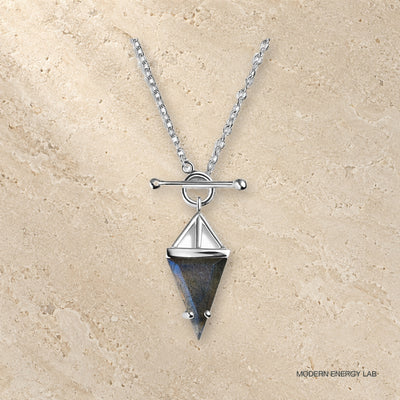
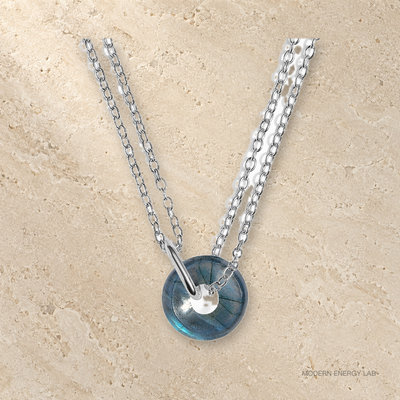
Labradorite is a feldspar material whose internal layers can create flashes of blue, green, yellow and other colors, called labradorescence. The flash changes with the viewing angle, so a stone that looks gray in one position may become bright when turned. A smooth cabochon is often chosen to make this changing optical effect easy to see.
A gray view and a bright view can both belong to the same labradorite surface. When comparing photographs, follow the position of the flash instead of expecting every angle to show the same color. Notice whether the light occupies a broad area or a smaller part of the face, and how the background tone appears when the flash moves away. This makes a sequence of ordinary viewing angles more useful than one especially vivid image. The changing optical effect is part of the material description, while a personal transformation message belongs to the occasion for which it is chosen.
Feldspar structure and modern transformation lore
Gem-A explains labradorite's iridescence through the structure of its feldspar layers. Contemporary crystal traditions connect the changing flash with transformation, imagination and new beginnings. Those modern associations can make the stone a thoughtful choice for a creative milestone, while its visible optical effect remains a separate material feature to compare in photographs.
Turning the stone in ordinary light
A labradorite pendant invites gentle movement: some wearers choose it for the way its color changes as they move through ordinary light. For a personal pause, turn a polished object slowly rather than rubbing it against a hard surface. Keep it in a soft compartment when resting, with its most appealing face positioned where you can enjoy it.
Area of color and cabochon depth
Ask for views from several angles if the visible flash matters to your choice. Compare the area of color, the background tone and the whole stone thickness. A pendant avoids some of the knocks a ring receives. Pair a gray-blue stone with silver and dark clothing for a clear flash, or a warm-toned cord for a quieter contrast.
A pendant can give a larger cabochon room to show its face without placing it where a working hand makes frequent contact. Look at the depth behind that face and the connection carrying the stone's weight. A silver setting can echo a gray-blue palette, while a warmer cord emphasizes another kind of contrast. For a creative milestone, the gift note may connect the changing appearance with a new chapter without needing a complicated collection of symbols. Select the visible area and mounting you like first, then compare how the piece would sit against the clothing in which it will be worn.
The supported edge of a larger stone
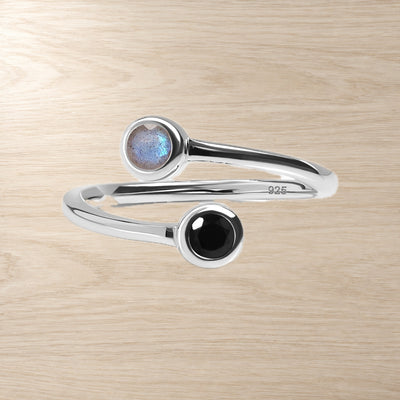
Feldspar benefits from gentle handling and protection against sharp blows. Store the stone separately from harder gems, and take off a ring before physical work.
Measuring help: the size hub. Care methods: the care guide.
The transition intention and matching material background continue in the new beginnings intention guide and sterling silver material notes. For a second viewing angle or cabochon thickness, ask Lab.
Cultural and material background: Gem-A: iridescence in gemstones.