symbol
Lotus: meaning & wearing guide

Bloom, bud or petal outline
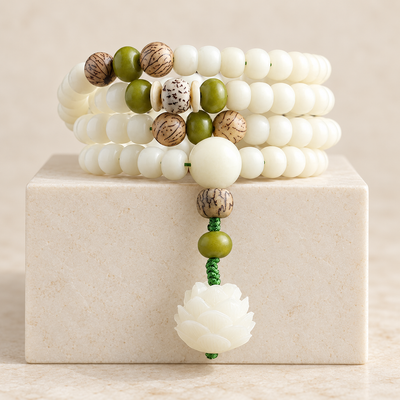
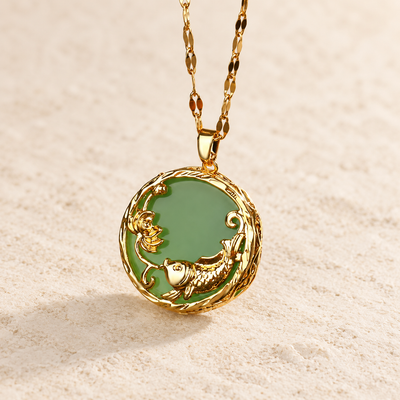
A lotus motif can show an open flower, a pointed bud, a seed pod or a ring of abstract petals. Those forms give a pendant quite different silhouettes: an open flower reads clearly from the front, while a bud is often compact and smooth. In jewelry, the petals may be carved into a stone, formed in metal or suggested by the setting around another gem.
Start with the flower's outline before looking at the stone color. A ring of many fine petals may be expressive in an enlarged photograph yet look almost like a plain round accent at necklace distance. A bud can keep a more distinct vertical shape with less surface detail. If the piece includes another figure, notice whether the lotus is its seat, an attribute held beside it or a separate decorative flower. Those arrangements tell different visual stories even when the listing groups them under the same motif.
Purity and awakening in Buddhist imagery
In Buddhist art, a lotus seat and the lotus carried by a bodhisattva belong to the imagery of purity and awakening. The Metropolitan Museum's Avalokiteshvara Padmapani sculpture shows the lotus as an identifying attribute of the bodhisattva of compassion. Contemporary wearers also connect the flower emerging from muddy water with renewal and a fresh start, turning the botanical image into a personal message.
A flower for a reflective space
Buddhist practitioners may use lotus imagery in devotional settings, where the figure and its attributes have a particular religious context. For an everyday pendant, some wearers choose a visible flower as a reminder to pause before reacting. A home ornament can sit on a clean, stable shelf beside a reading or reflection space, with enough room around the petals to handle it safely.
How petals read at a small scale
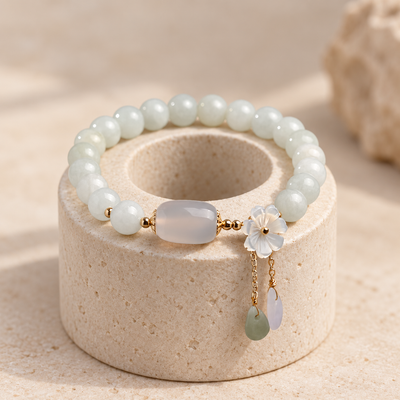
Compare a detailed open bloom with a simple petal outline at the size you will actually wear. Fine cutout metalwork can catch on a knitted collar; a rounded carved flower often works well on a short cord. Pale moonstone or pearl creates a soft palette, while a darker stone makes the flower's outline more pronounced.
To choose between an outline and a carved bloom, picture the background you usually wear. Open spaces reveal the collar beneath them, while solid petals retain their own color against patterned clothing. The flower's depth also matters: a raised center can make a small pendant more noticeable than its width suggests. For a gift marking a fresh start, an uncomplicated bud may express the message more quietly than a large ceremonial composition. Let the recipient's preference for visible detail guide the choice of flower, then use the material notes to compare the pale palette.
Protecting an open bloom
Use a soft brush only where the stated materials allow it, taking particular care around narrow gaps between petals. Hold a pendant by its body when wiping it rather than pulling on the bail. Store openwork designs separately from chains, and inspect any small stones set around the flower before wearing it again.
Measuring help: the size hub. Care methods: the care guide.
The renewal theme and soft feldspar palette are developed in the new beginnings intention guide and moonstone material notes. For a petal-depth or bail measurement, ask Lab.
Cultural and material background: The Met: Avalokiteshvara Padmapani.