symbol
Money Frog: meaning & wearing guide
Finding the coin and three-legged form
The money frog, often called a three-legged toad or chan chu, is a popular Chinese auspicious motif. Modern versions may show a coin in the mouth, coins under the body or a rounded creature resting on a base. Notice whether the listing is for a pendant, a bracelet accent or a household figure, since each has a different scale and practical purpose.
Look first for the coin's position. A coin held in the mouth is visually different from a pattern of coins beneath the animal, and a loose attachment needs a different kind of inspection from a solid carving. A pendant may simplify the figure into a compact emblem, while a tabletop piece can show its body and base in depth. Decide which part of the prosperity story you want to make prominent, then compare how clearly that feature appears when the object is resting in its intended position.
Liu Hai and prosperity imagery
Chinese popular stories connect the toad with Liu Hai, an immortal often shown with coins and an accompanying toad. This imagery became associated with wealth, luck and the enjoyment of abundance. The Met documents Liu Hai and toad imagery in Chinese art. Today's feng shui interpretations often emphasize welcoming and retaining prosperity through the object's orientation.
An inward-facing entrance placement
A familiar modern feng shui placement convention puts a money frog just inside an entrance, facing inward as a symbolic welcome for wealth. Some practitioners give it a quieter place away from direct foot traffic. For a small pendant, the same motif can carry a personal prosperity intention; choose a comfortable position where a coin or projecting limb will sit securely.
The base, mouth and pendant back
Compare the base dimensions and the figure's total weight before choosing a home ornament. For jewelry, check how far a coin projects from the mouth and whether the back is smooth. A small metal charm makes the coin detail clear; a larger stone carving has a stronger three-dimensional presence. Match the setting to the surface or neckline you plan to use.
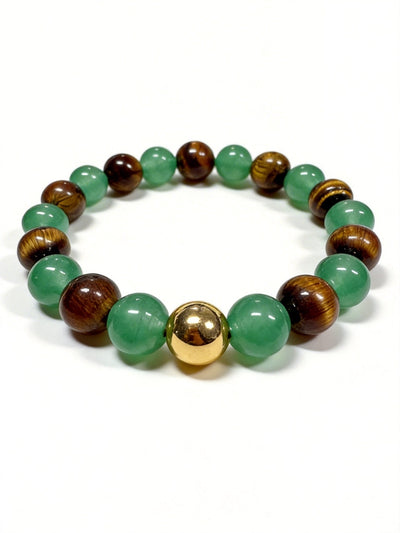
For a home display, the entrance convention is a symbolic orientation rather than a reason to place a heavy ornament where it will be bumped. Picture the inward-facing figure on the actual shelf or surface you plan to use, with room to lift it by its body and base. On jewelry, a smooth back and a contained coin detail can matter more than a large sculptural footprint. A restrained metal accent may show the mouth clearly beside dark beads. A more substantial stone figure suits someone who wants to see the animal's full form as part of a deliberate display.
Pressure away from coins and limbs
Lift a household figure by its body and base, keeping pressure away from the coin and limbs. Dust recesses with a soft dry brush. Keep solvents away from any painted coin or surface detail. For a pendant, inspect its bail and any separate coin attachment before wearing it.
Measuring help: the size hub. Care methods: the care guide.
The prosperity intention and companion material notes are linked in the wealth prosperity intention guide and citrine material notes. For a removable coin or base measurement, ask Lab.
Cultural and material background: The Met: Liu Hai and the toad.