symbol
Pixiu: meaning & wearing guide

Recognizing the creature
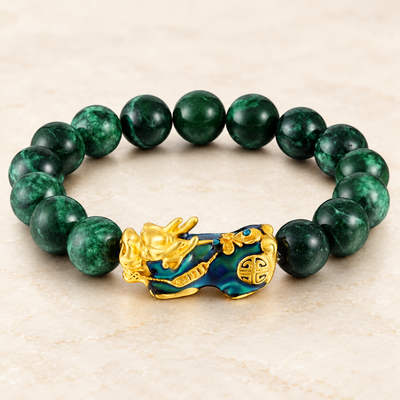
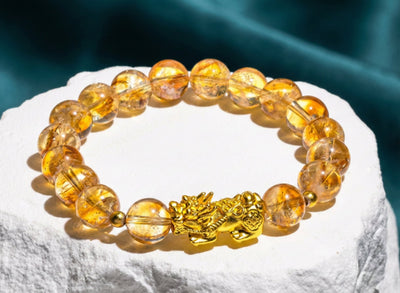
Pixiu is a mythical animal in Chinese auspicious imagery, usually shown with a powerful body, a prominent head and an open mouth. Jewelry versions range from three-dimensional creatures threaded onto beads to small carved pendants. Look for the animal's face and body rather than judging the motif by its color: jade, metal and red composite carvings can all depict the same creature.
The head is often the first feature noticed on a pixiu strand, but the body tells you how the carving will behave when worn. A long creature threaded from end to end creates a different outline from a squat figure suspended through a bail. Imagine the bracelet resting rather than held up for a photograph: the mouth, horns and neighboring beads should remain readable in that position. This makes the motif's direction a practical design question as well as part of its popular prosperity story.
The story behind the open mouth
In Chinese folk tradition, pixiu is said to consume gold and retain wealth, which explains the familiar story of wealth entering without leaving. Modern feng shui practitioners connect this guardian imagery with prosperity, luck and Protection. The National Palace Museum documents related auspicious beast imagery in Chinese art; today's bracelet customs belong to a living popular tradition rather than to one fixed historical jewelry design.
An outward-facing head
A common modern feng shui convention is to wear a pixiu bracelet on the left wrist, with the head pointing outward, toward the little-finger side. Some practitioners place a household figure facing an entrance as a symbolic invitation to prosperity. For jewelry, first check which way the carving actually sits when the strand rests naturally; a flat pendant and a threaded three-dimensional bead work differently.
Balancing a carving with its beads
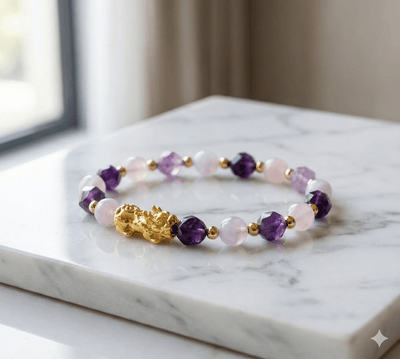
A small rounded carving is usually easier to combine with a watch than a tall head with projecting horns. Compare the charm's full length and height, the adjacent bead diameter and the usable wrist range. Pair a warm metal creature with black beads for contrast, or a pale jade carving with a simple neutral cord for a quieter presentation.
A watch wearer might prefer the animal beside, rather than pressed against, the watch case. Look for enough room around the head to turn the wrist without a projecting detail meeting metal. On a necklace, a broader body can give the face a stable visual position, while a deep carving may tip forward. Decide whether you want the creature to dominate the strand or sit among beads of similar scale. That choice gives a useful reason to compare the charm's height with the adjacent beads instead of judging a bracelet by bead size alone.
Horns, holes and cord wear
Inspect the cord where it passes through the carving and look for sharp edges around the hole. Keep projecting horns away from clothing that catches easily. Guide a sleeve clear of the projecting horns rather than pulling it across the carving.
Measuring help: the size hub. Care methods: the care guide.
For the prosperity context and a contrasting dark strand, continue with the wealth prosperity intention guide and black obsidian material notes. Questions about a carving's full height or threading can go to Lab.
Cultural and material background: National Palace Museum: auspicious beast imagery.